
Open problems
What the great open problems say, what has been proved on the way to Goldbach, Riemann, and odd perfect numbers, and why checking is not proving.
Articles
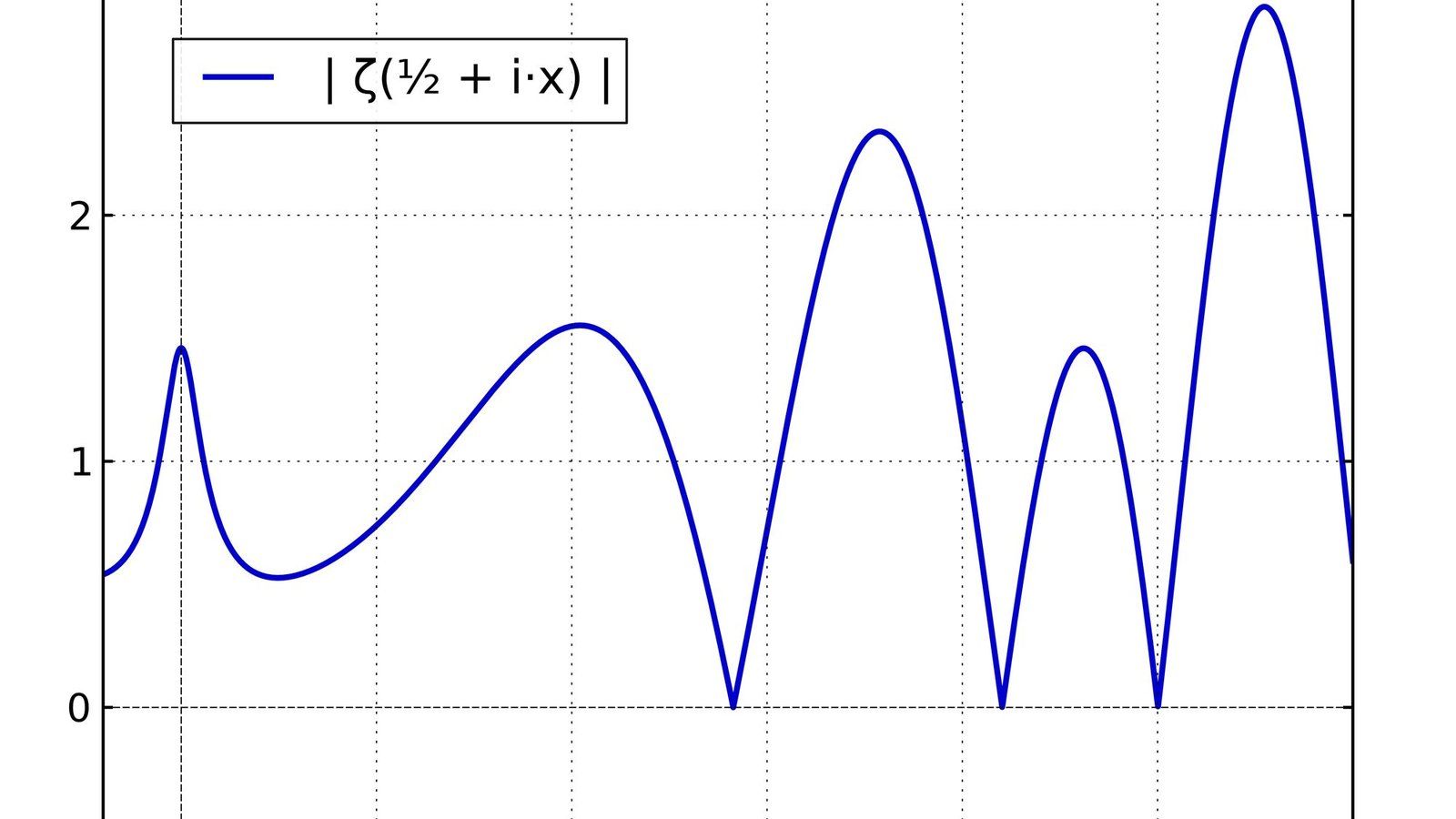
What the Riemann hypothesis actually says
A million-dollar problem about where a certain function is zero sounds far from the primes. It is not: the hypothesis is a precise statement about how evenly the primes are spread, and it can be stated without a single complex number. Here is both versions, and why they are the same.
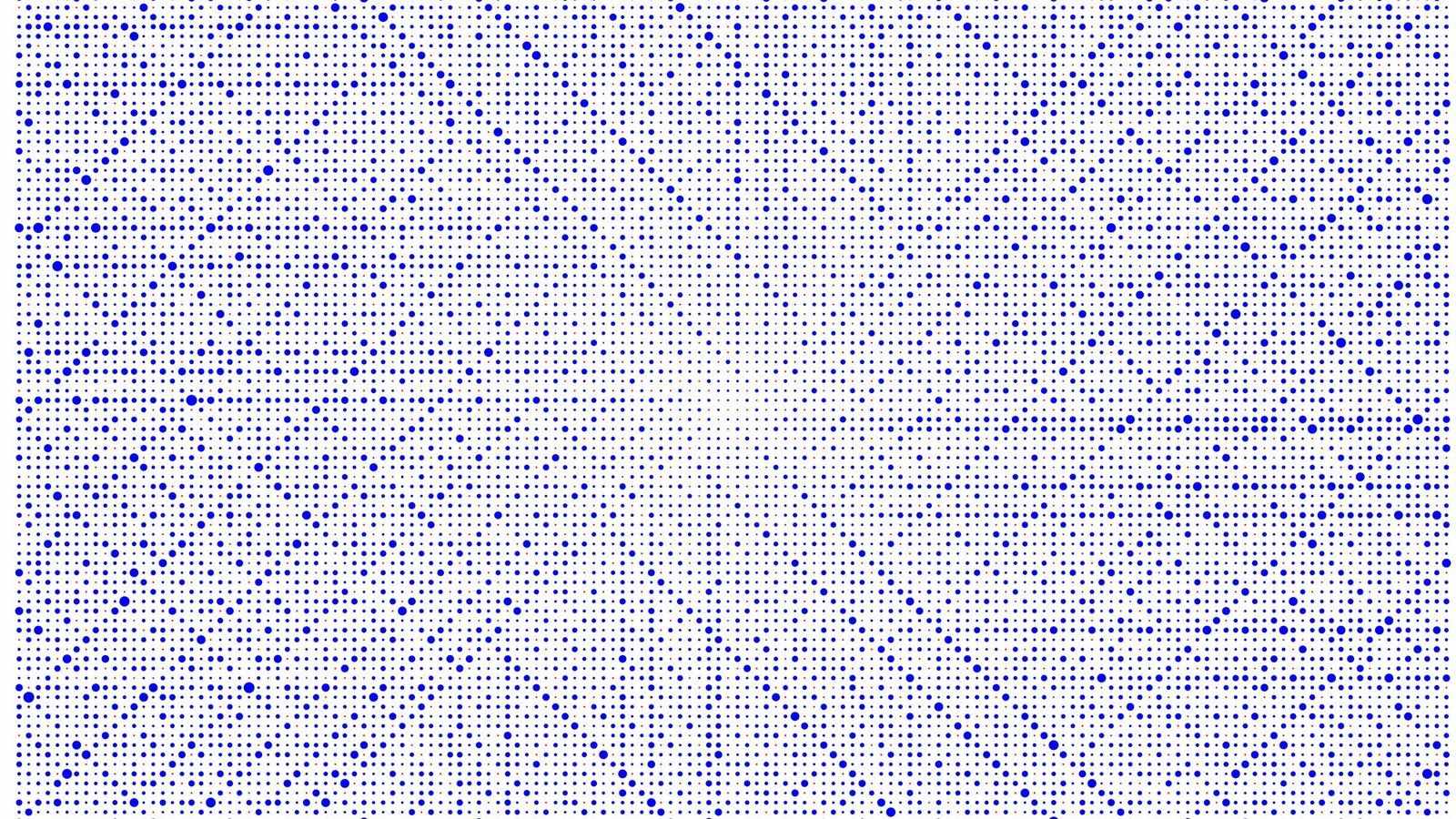
Ulam's spiral and the diagonals of primes
Write the integers in a square spiral, mark the primes, and diagonal lines appear. Stanislaw Ulam noticed it while doodling through a dull talk in 1963. The lines are real, they are quadratic polynomials, and whether they go on for ever is an open question.
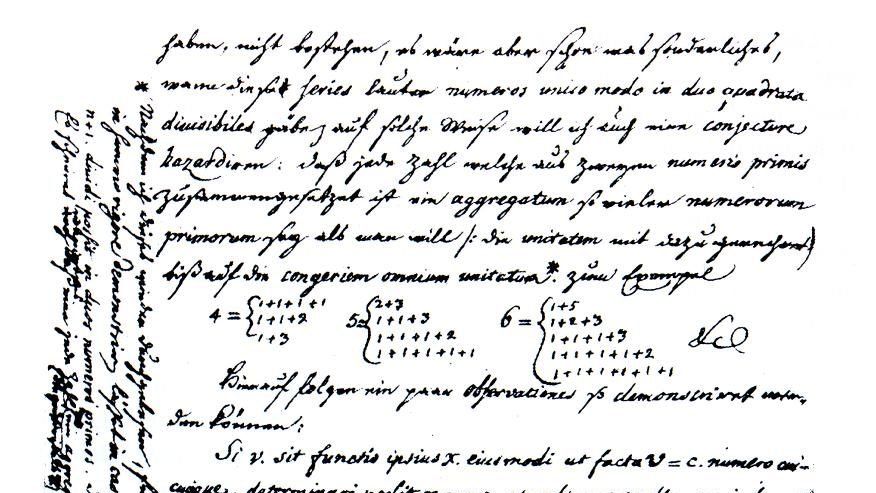
Goldbach's conjecture, checked to four quintillion
Every even number greater than 2 is the sum of two primes: 4 = 2 + 2, 100 = 3 + 97, and so on up to 4,000,000,000,000,000,000, where the checking stopped in 2012. Nobody has proved it for the numbers beyond. Here is the letter of 1742, what has been proved, and why a verification is not a proof.
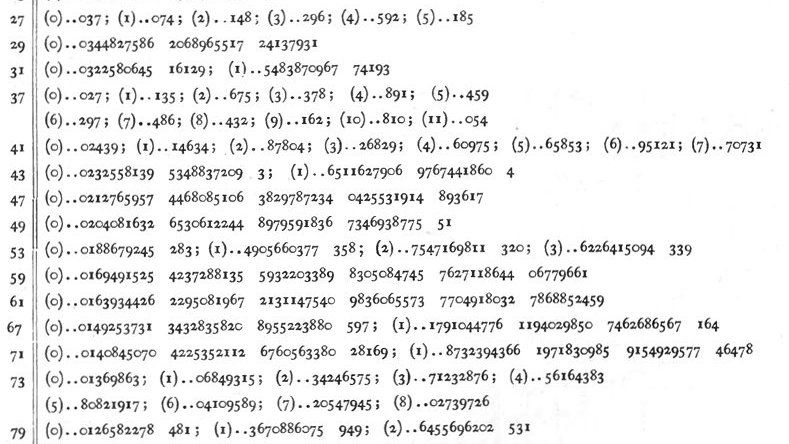
Why the digits of 1/7 repeat every six places
1/7 = 0.142857142857... and the block of six never changes. 1/13 repeats every six places too, 1/17 every sixteen, and 1/3 every one. The period is the order of 10 modulo the denominator, and the question of which primes get the longest possible period is still open.
Perfect numbers and the hunt for an odd one
6 = 1 + 2 + 3 and 28 = 1 + 2 + 4 + 7 + 14 are perfect: each is the sum of its proper divisors. Euclid knew how to make them, Euler proved his recipe makes all the even ones, and nobody knows whether an odd one exists. Here is the oldest open problem in mathematics.
In the masterclass
The Great Problems of Number Theory
Goldbach, twin primes, the Riemann hypothesis, and Fermat's Last Theorem: what is known and what is open
The Riemann Zeta Function
Complex numbers, the zeta function and its continuation, its zeros, and the Riemann hypothesis
Sieve Methods
From Eratosthenes to Brun, Selberg, and Chen: counting what has no small prime factor
Gaps Between Primes
Small gaps and large gaps, from the average ln p to the bounded gaps of Zhang and Maynard