Why 1 is not a prime number and how unique factorization settles it
Why 1 is not a prime number is a question that looks simple, yet it cuts straight to the heart of what prime numbers are. The short answer is that modern number theory defines primes so that the factorisation of every positive integer greater than 1 is unique up to order.
If you want the broader setting, this sits naturally inside Unit 3, Prime Numbers and Unique Factorization, alongside the basic ideas of divisibility and factorisation. For a nearby topic, see Euclid's proof that the primes never end and The sieve of Eratosthenes, and how to make it fast.
What a prime number means today
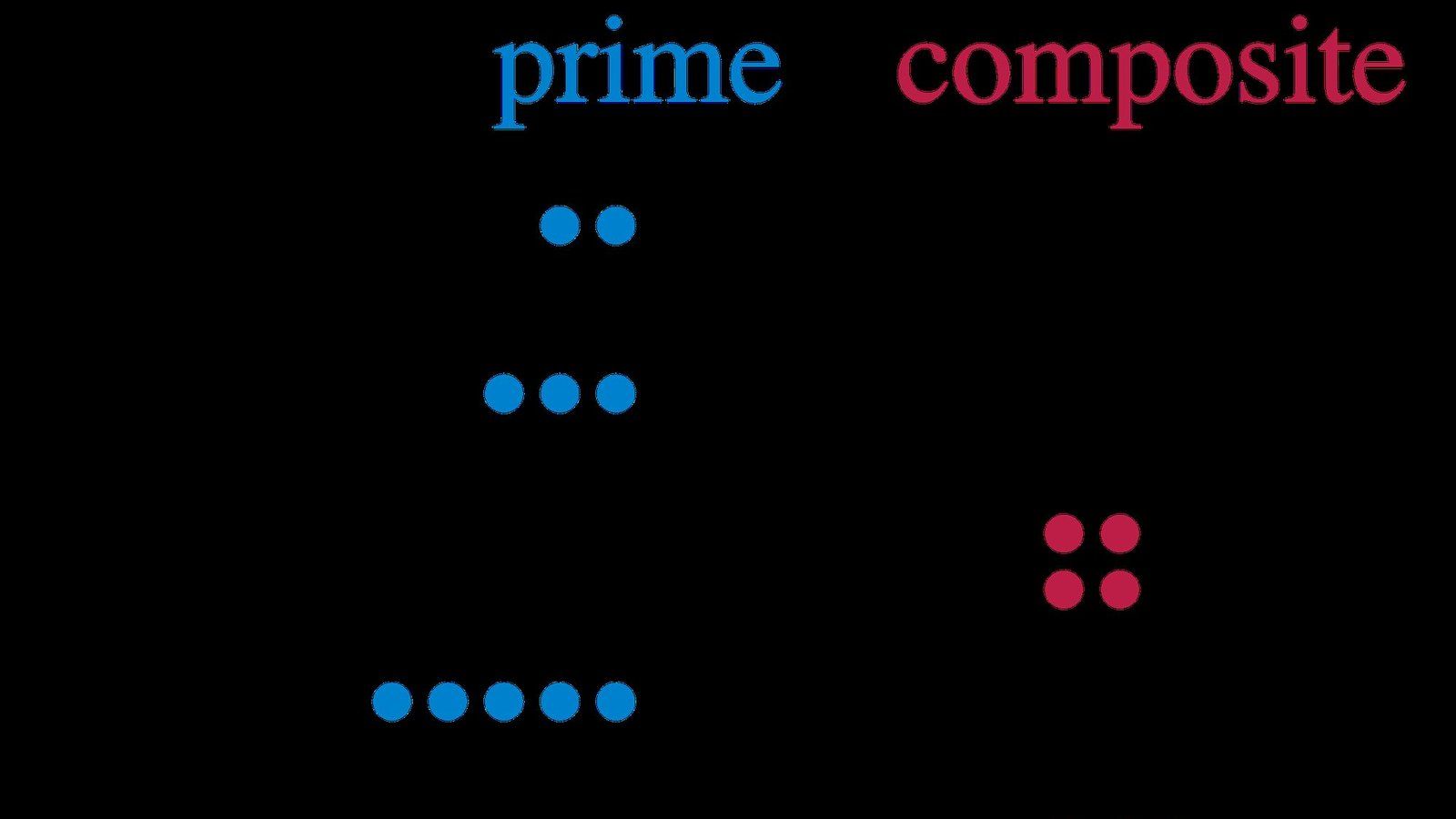
In modern arithmetic, a prime number is a positive integer greater than 1 whose only positive divisors are 1 and itself. That excludes 1 at once. The first prime is 2, then 3, 5, 7, 11, and so on.
This definition is designed to make the basic theorem of arithmetic work cleanly: every integer greater than 1 can be written as a product of primes, and that product is unique apart from the order of the factors. For example,
\[60 = 2^2 \cdot 3 \cdot 5.\]
If 1 were allowed to count as a prime, we could also write
\[60 = 1 \cdot 2^2 \cdot 3 \cdot 5 = 1^7 \cdot 2^2 \cdot 3 \cdot 5 = 1^{100} \cdot 2^2 \cdot 3 \cdot 5.\]
Those are different factorisations only because of the extra 1s. A prime definition that allows this would make the central theorem of elementary number theory awkward, and in practice unusable.
Why 1 is not a prime number in unique factorization
Unique factorization depends on the existence of a special element called a unit. In the ordinary integers, the only positive unit is 1, and it behaves differently from primes. Multiplying by 1 changes nothing, so 1 does not build structure in the way primes do.
Suppose for a moment that 1 were prime. Then the statement “every integer greater than 1 factors uniquely into primes” would fail immediately, because a factorisation could always be padded with extra 1s. The number 84 would have infinitely many prime factorizations:
\[84 = 2^2 \cdot 3 \cdot 7 = 1 \cdot 2^2 \cdot 3 \cdot 7 = 1^5 \cdot 2^2 \cdot 3 \cdot 7,\]
and so on. The theorem would lose its content.
There is a deeper reason too. In algebra, the notion of prime is meant to separate genuinely irreducible building blocks from harmless factors that do nothing. In \(\mathbb{Z}\), 1 is the harmless factor, while 2, 3, 5, and the rest are the genuine building blocks.
Why 1 is not a prime number in the history of tables
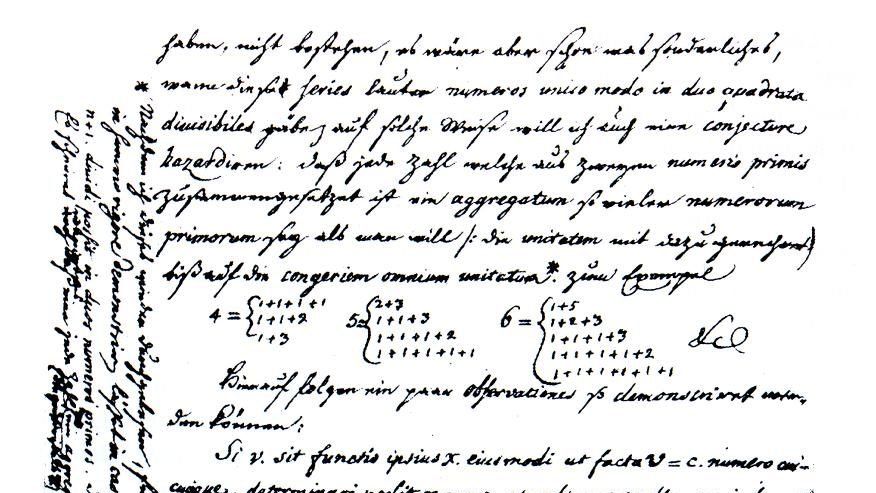
For a long time, many tables and textbooks did list 1 as a prime. That practice lasted into the early twentieth century. Historical sources show that the definition was not always settled in the way it is now, and some authors treated 1 as a prime because it had only one positive divisor in common with the integers they were studying. Over time, the need for a clean statement of unique factorization pushed mathematicians towards the modern definition.
The change was gradual rather than sudden. By the late nineteenth century and early twentieth century, the modern convention had become standard in mathematics texts, especially once algebraic number theory made the role of units more explicit. A useful historical overview is given by the MacTutor history pages at Prime numbers in historical context, which discusses how the definition settled down.
The important point for students is that mathematics sometimes changes its definitions to protect theorems from artificial exceptions. That is what happened here. Once 1 was excluded, the language of primes matched the structure of factorization much better.
How Euclid and later writers make the distinction work
Euclid already had a strong sense that prime numbers are the indivisible pieces from which all other numbers are built. In modern terms, a prime has exactly two positive divisors. The number 1 has only one positive divisor, so it falls outside that pattern. This makes the set of primes behave neatly under multiplication and divisibility.
Later writers sharpened the picture further. In elementary number theory, it is standard to reserve the word prime for numbers greater than 1, and to reserve the word unit for numbers like 1 and \(-1\) in \(\mathbb{Z}\). That separation is especially useful when you move beyond the integers into rings, where the distinction between primes and units becomes essential.
For a broader view of how these ideas connect to the rest of elementary theory, the prime numbers topic page and free number theory resources are useful starting points.
What students should remember
The fastest way to remember the answer is this: 1 is excluded because primes are meant to be the building blocks of factorization, and 1 does not contribute any building material. It only leaves factors unchanged.
That is why the modern definition says a prime is a positive integer greater than 1 with exactly two positive divisors. It keeps the Fundamental Theorem of Arithmetic true in a precise and useful form, and it avoids endless ambiguity in factorisations.
For a fuller treatment of the theorem behind this definition, see the course unit Prime Numbers and Unique Factorization, where the definition is used in proofs from the start.
Frequently asked questions
Why is 1 excluded if it has only one divisor?
Because the definition of prime is tied to factorisation, not just to divisors. If 1 were prime, factorisations would no longer be unique, since extra 1s could always be inserted.
Was 1 really called prime in the past?
Yes. Many older tables and books did count 1 as prime, especially before the modern definition became standard in the early twentieth century.
Does this choice affect any calculations?
It affects how theorems are stated, but it makes calculations cleaner. With 1 excluded, every integer greater than 1 has one prime factorisation up to order.